Phonological Awareness
A Parent's Guide to Phonological Awareness:
Building Blocks for Reading Success
At Tenterden Primary Federation, we are dedicated to helping your child become a confident reader and writer. To achieve this we use the Little Wandle Foundations programme. A crucial first step in this learning journey is called phonological awareness.
Research consistently shows that strong phonological awareness skills are closely linked with learning to read.
This guide explains this vital skill, highlights its importance, and provides simple ways you can support your child's development at home.
 What Is Phonological Awareness?
Phonological awareness is simply the ability to hear and play with the sounds in spoken language. It is a listening and speaking skill; not about seeing written letters yet. Think of it as developing an "ear" for the individual sounds that make up words.
The Phonological Awareness Program teaches these listening skills systematically to ensure children have the strong foundation needed to decode words and become a successful, fluent reader.
Phonological Awareness vs. Phonics: What’s the Difference?
 Phonological Awareness: Is working with spoken sounds only (e.g., clapping syllables, finding rhymes).
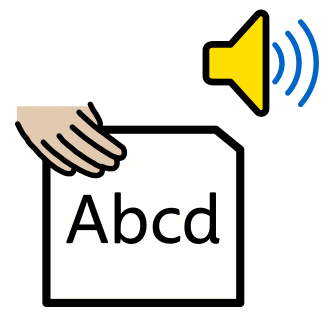 Phonics: Is connecting spoken sounds to written letters (e.g., knowing the letter 'T' makes the /t/ sound).
Your child needs to be able to hear the sounds first (phonological awareness) before they can successfully match those sounds to letters (phonics).
 Stages of Development: A Sound Skills Ladder
Children develop these listening skills gradually, moving from larger sound chunks to the smallest individual sounds. The Phonological Awareness Programme starts with very early listening activities (often called Phase One) before moving on to using letters in later phases.
Before your child can make good progress in learning to read words, they need to be able to:
- Recognise speech sounds as distinct from environmental noises (like a phone ringing).
- Identify individual words within a sentence (e.g., "The cat slept" has three words).
- Recognise that words can rhyme (cat and hat).
- Break words down into syllables or "chunks" (e.g., bu-tter-fly).
- Hear and blend individual sounds (phonemes) within a word (e.g., blending /d/ /o/ /g/ to say "dog").
 Fun Activities to Do at Home
The best way to help your child is by making sound play fun and integrating it into your daily routines. You don't need special materials!
Here are some ideas:
- Rhyme Time: Read nursery rhymes and rhyming books together. Pause before the last word of a line and let your child fill it in (e.g., "Humpty Dumpty sat on a wall, Humpty Dumpty had a great... fall!"). You can find lots of Nursery Rhymes in the EYFS Rhyme Time section on our website.
- Clap the Syllables: As you say family members' names or words for objects around the house, clap out the "chunks" (e.g., su-per-mar-ket has four claps).
- Play "I Spy a Sound": Instead of "I spy with my little eye something beginning with T," try "I spy something that starts with the /t/ sound" (focus on the sound itself, not the letter name "tee").
- The Robot Game (Blending): Pretend to be a robot and say a word in slow motion, sound by sound (/c/ - /a/ - /t/). Ask your child to blend the sounds together to say the word quickly ("cat!").
- The Deletion Game: Ask, "What would 'cart' be without the last sound (/t/)?" The answer is "car"!
By engaging in these simple, fun activities, you are providing essential support that will pave the way for your child's reading journey.
If you have any concerns about your child's progress, please speak to their class teacher.